
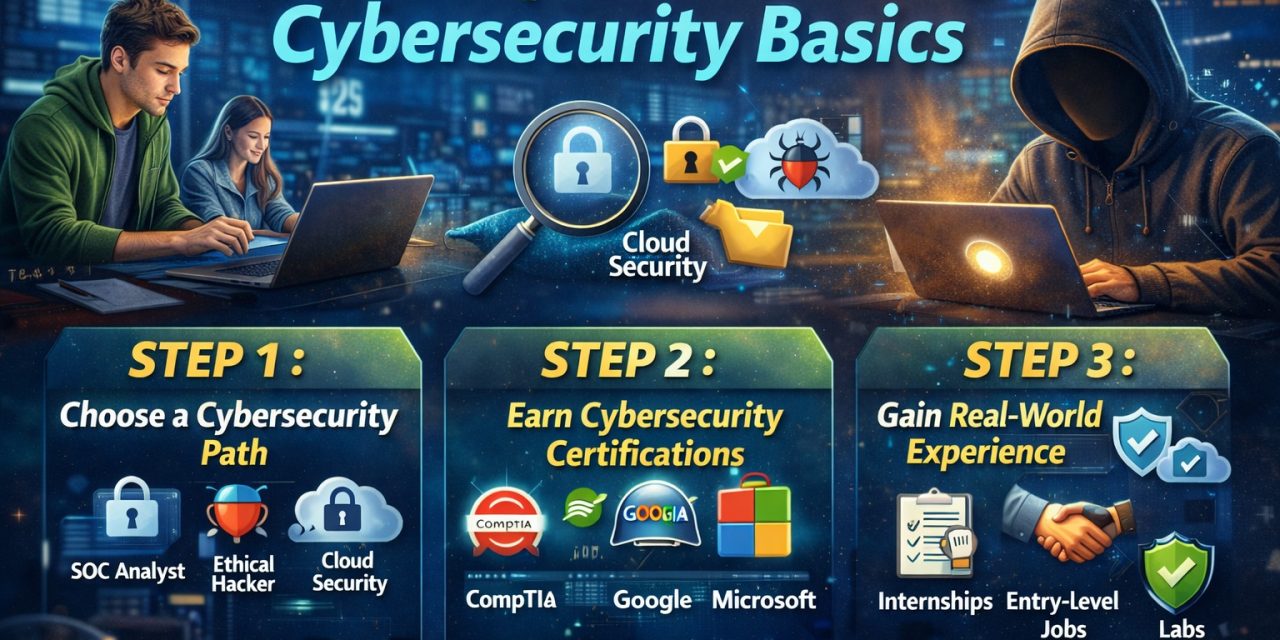
Introduction: What to Do After Learning Cybersecurity Basics
Many beginners complete basic cybersecurity concepts but then feel confused about what to do next. This guide is written to help you move from learning mode to job-ready mode.
If you already understand networking basics, security fundamentals, and common cyber threats, as mentioned in my last cybersecurity career guide, this article will show you exactly how to progress with next steps.
Step 1: Choose One Cybersecurity Career Direction
Cybersecurity is a broad field. You should focus on one direction first instead of trying everything.
Popular Beginner-to-Intermediate Paths
- SOC Analyst
- Cybersecurity Analyst
- GRC Analyst
- Junior Penetration Tester
- Cloud Security Associate
Choosing one path helps you learn faster and build relevant skills.
Step 2: Learn Industry-Standard Cybersecurity Tools
Recruiters look for tool familiarity, even for entry-level roles.
Must-Know Tools for Beginners
- SIEM tools (Splunk basics, ELK concepts)
- Vulnerability scanners (Nessus basics)
- Endpoint protection tools
- Firewalls and security logs
You don’t need expert-level knowledge—basic usage and understanding is enough.
Step 3: Practice Real-World Cybersecurity Labs
Hands-on experience is critical.
Recommended Practice Platforms
- TryHackMe (SOC & Blue Team paths)
- Hack The Box (Academy beginner tracks)
- Open-source security labs
Focus on:
- Log analysis
- Alert investigation
- Incident response basics
Step 4: Build Simple Cybersecurity Projects
Projects prove your skills more than certificates.
Beginner Project Ideas
- Home lab with Linux and firewall
- Log monitoring project
- Vulnerability scan report
- Incident response case study
Document your projects clearly.
Step 5: Create a Job-Ready Cybersecurity Resume
Resume Tips for Fresh Graduates
- Keep it one page
- Highlight labs and projects
- Mention tools and certifications
- Avoid unnecessary personal details
Use clear language and measurable outcomes.
Step 6: Optimize LinkedIn for Cybersecurity Jobs
Your LinkedIn profile is your digital resume.
Optimization Checklist
- Clear headline (Aspiring SOC Analyst)
- Professional photo
- About section with skills
- Share learning and labs regularly
Recruiters actively search LinkedIn for cybersecurity talent.
Step 7: Prepare for Cybersecurity Interviews
Common Entry-Level Interview Topics
- Networking basics
- Malware and phishing
- SIEM and logs
- Incident response steps
- Basic security scenarios
Practice explaining concepts in simple words.
Certifications to Consider at This Stage
- CompTIA Security+
- Blue Team Level 1 (BTL1)
- Microsoft Security Operations Analyst
Certifications should support your skills—not replace them.
Common Mistakes After Learning Basics
- Waiting too long before applying
- Over-studying without practice
- Ignoring LinkedIn networking
- Applying without tailoring resume
Progress comes from action.
Frequently Asked Questions (FAQs)
What should I learn after cybersecurity basics?
Focus on one career path, learn relevant tools, and practice labs.
Are projects necessary for cybersecurity jobs?
Yes, projects demonstrate practical skills and improve hiring chances.
How many labs are enough before applying for jobs?
When you can confidently explain what you did and why, you are ready to apply.
Can I apply without experience?
Yes, labs, certifications, and projects count as experience for entry-level roles.
Final Advice from a CTO & Cybersecurity Consultant
Cybersecurity careers are built through consistent practice, smart focus, and real-world exposure.
Do not wait for perfection. Apply early, learn continuously, and grow with experience.



Recent Comments