
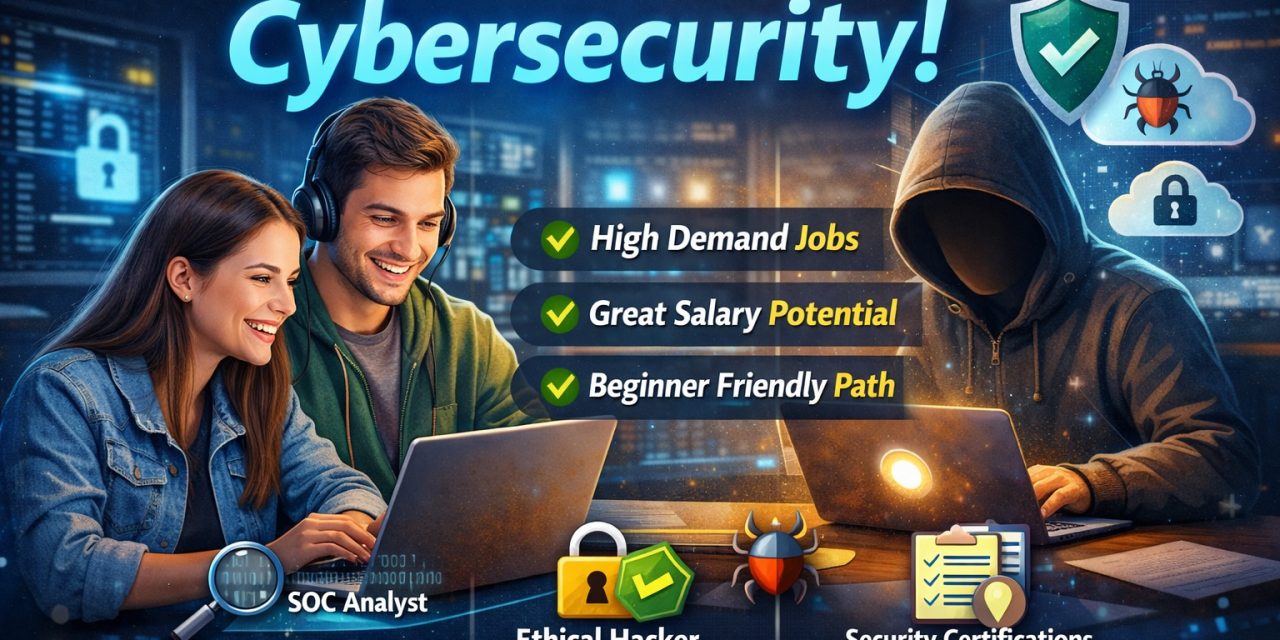
Introduction: Why Cybersecurity is a Smart Career Choice
Cybersecurity is one of the fastest-growing career fields in the IT industry. As cyber attacks increase globally, organizations need skilled professionals to protect their systems, data, and users.
This beginner-friendly cybersecurity career guide is designed to help fresh graduates and new career seekers understand cybersecurity in simple language and start their journey with confidence.
What is Cybersecurity? (Simple Explanation)
Cybersecurity is the practice of protecting computers, networks, websites, applications, and data from unauthorized access, attacks, and damage.
In simple terms:
Cybersecurity professionals protect digital systems the same way security guards protect physical buildings.
Why Choose Cybersecurity as a Career?
Cybersecurity offers long-term stability and strong career growth.
Benefits of a Cybersecurity Career
- High global demand
- Competitive salaries
- Jobs available in every industry
- Remote and international work opportunities
- Continuous learning and growth
Who Can Start a Career in Cybersecurity?
You do not need to be an expert hacker or programmer to begin.
Cybersecurity is suitable for:
- IT and Computer Science graduates
- Software engineers
- Networking students
- Fresh graduates with basic computer knowledge
- IT support or helpdesk professionals
Essential Skills Required for Beginners
1. Computer Fundamentals
- Understanding operating systems (Windows, Linux)
- Basic hardware and software concepts
2. Networking Basics
- What is an IP address
- How the internet works
- Basic protocols (TCP/IP, DNS, HTTP)
3. Cybersecurity Fundamentals
- Malware, viruses, phishing attacks
- Firewalls and antivirus tools
- Password security and authentication
Popular Cybersecurity Career Paths (Entry-Level Friendly)
SOC Analyst (Security Operations Center)
- Monitors security alerts
- Entry-level role
- Ideal starting position
Cybersecurity Analyst
- Identifies and responds to security threats
- Protects systems and networks
Penetration Tester (Ethical Hacker)
- Tests systems for vulnerabilities
- Requires deeper technical knowledge
GRC Specialist (Governance, Risk & Compliance)
- Focus on policies, audits, and compliance
- Less technical, more documentation-based
Cloud Security Specialist
- Secures cloud platforms like AWS and Azure
- High demand globally
Do You Need Coding for Cybersecurity?
No, coding is not mandatory at the beginning.
However, basic knowledge of:
- Python
- Bash scripting
can be helpful as you progress in your career.
Best Cybersecurity Certifications for Beginners
Start with entry-level certifications to validate your skills:
- CompTIA Security+
- Google Cybersecurity Certificate
- Microsoft Security Fundamentals
- EC-Council CEH (after gaining basics)
Certifications improve job opportunities and salary potential.
Step-by-Step Cybersecurity Learning Roadmap
Step 1: Learn the Basics
- Free online tutorials
- Beginner YouTube courses
- Cybersecurity blogs
Step 2: Hands-On Practice
- Practice labs on TryHackMe
- Beginner paths on Hack The Box
- Linux and networking exercises
Step 3: Build Your Professional Profile
- Create a LinkedIn profile
- Share learning milestones
- Follow cybersecurity professionals
Step 4: Apply for Entry-Level Jobs
- SOC Analyst
- Junior Cybersecurity Analyst
- Security Intern
Common Mistakes Beginners Should Avoid
- Trying to learn everything at once
- Skipping networking fundamentals
- Purchasing expensive courses too early
- Expecting high salaries immediately
- Ignoring hands-on practice
Cybersecurity Salary Expectations for Fresh Graduates
Entry-level cybersecurity salaries are competitive and increase rapidly with experience and certifications.
Factors affecting salary:
- Country and region
- Certifications
- Hands-on skills
- Industry demand
Frequently Asked Questions (FAQs)
Is cybersecurity a good career for beginners?
Yes, cybersecurity is an excellent career choice due to high demand and job security.
Can I start cybersecurity with no experience?
Yes, start with fundamentals, certifications, and hands-on labs.
How long does it take to learn cybersecurity?
Basic skills can be learned in 3 to 6 months with consistent effort.
Is cybersecurity difficult to learn?
Cybersecurity is easy to learn when approached step by step.
Do I need a degree to work in cybersecurity?
A degree helps, but skills and certifications matter more.
Final Advice from a CTO & Cybersecurity Consultant
Cybersecurity success depends on consistency, practice, and curiosity.
Start small, practice daily, and focus on fundamentals. The industry rewards dedication and real skills. You can read Next steps in our CyberSecurity Career guide.


Thanks for sharing nice guideline for career to get into cybersecurity domain